Friday, December 7, 2018
SELF ASSESSMENT
This term I have improved in translation and on the oral project, also I have done all the homework and I got worse in vocabulary and the grammar in the second exam. Im confused at nothing and the things that I liked the most are Abigails vocabulary and other activities. I need to improve in vocabulary.

Saturday, November 24, 2018
FNP
WHAT IS THE FNP?
The FNP is a more advanced form of flexibility training that involves both a stretch and a contraction of the muscle group being targeted.
The FNP has four phases:
-You hold the muscle you want to exercise for 20 seconds.
-Six or eight seconds of agonist contraction.
-Three or five seconds to relax the muscle.
-Twenty seconds to stretch again the muscles.
Quadriceps FNP:

Hamstrings FNP:
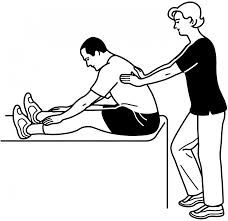
General syndrome:
General adaptation syndrome is a three-stage response that the body has to stress.
 Threshold Law.
The threshold law is a claimed lawconcerning the effects of pharmaca or poisons in various concentrations. It states that: For every substance, small doses stimulate, moderate doses inhibit, large doses kill.
Training load:
Training load is a textual feedback on the strenuousness of a single training session.The main components of training load are volume and intensity. These must be increased to cause progressive overload and adaptation. Also, there is a trade-off between volume and intensity: in most cases, volume goes down as intensity increases and vice-versa.
Example:
Two players reached different training effect score from the workout (3.2 vs 4.0). All the interval sprints were performed in high intensity training zone (red). The reason was found from the heart rate recovery between the sprints. Player A recovered more quickly between the sprints whereas player B stayed in the high intensity training zone also during the recovery breaks.
Principles of training according to Oliver and Zintl:
The FNP is a more advanced form of flexibility training that involves both a stretch and a contraction of the muscle group being targeted.
The FNP has four phases:
-You hold the muscle you want to exercise for 20 seconds.
-Six or eight seconds of agonist contraction.
-Three or five seconds to relax the muscle.
-Twenty seconds to stretch again the muscles.
Quadriceps FNP:
Hamstrings FNP:
General syndrome:
General adaptation syndrome is a three-stage response that the body has to stress.
1: Alarm: Upon perceiving a stressor, the body reacts with a “fight-or-flight” response and the sympathetic nervous system is stimulated as the body’s resources are mobilized to meet the threat or danger.
2: Resistance: The body resists and compensates as the parasympathetic nervous system attempts to return many physiological functions to normal levels while body focuses resources against the stressor and remains on alert.
3: Exhaustion: If the stressor or stressors continue beyond the body’s capacity, the resources become exhausted and the body is susceptible to disease and death.
The threshold law is a claimed lawconcerning the effects of pharmaca or poisons in various concentrations. It states that: For every substance, small doses stimulate, moderate doses inhibit, large doses kill.
Training load:
Training load is a textual feedback on the strenuousness of a single training session.The main components of training load are volume and intensity. These must be increased to cause progressive overload and adaptation. Also, there is a trade-off between volume and intensity: in most cases, volume goes down as intensity increases and vice-versa.
Example:
Two players reached different training effect score from the workout (3.2 vs 4.0). All the interval sprints were performed in high intensity training zone (red). The reason was found from the heart rate recovery between the sprints. Player A recovered more quickly between the sprints whereas player B stayed in the high intensity training zone also during the recovery breaks.
Principles of training according to Oliver and Zintl:
Oliver:
-Principles related to the stimulation of physical conditioning.
- Principles related to the systems to which said stimulus is directed.
- Principles related to the response to said stimulus
Zintl:
- Those who initiate the adaptation.
- Those that guarantee adaptation.
- Those who exercise a specific control of adaptation.
- Those that guarantee adaptation.
- Those who exercise a specific control of adaptation.
Wednesday, November 7, 2018


Saturday, October 27, 2018
VOCABULARY UNITS 0 AND 1
This is some vocabulary we have learned with the book:
Browse: to look in an unhurried way at goods displayed for sale, as in a store.
Scroll: to move a cursor smoothly, causing new data to replace old on the monitor.
Swipe: to slide (a magnetic card) quickly through an electronic device that reads data.
Tap: a plug or stopper for closing an opening through which liquid is drawn, as in a cask.
Update: incorporate new information in.
Bully: one who bothers and hurts smaller people.
Victims: a person who suffers from destruction or an injury.
Star: the main person on a film, team or group.
Browse: to look in an unhurried way at goods displayed for sale, as in a store.
Scroll: to move a cursor smoothly, causing new data to replace old on the monitor.
Swipe: to slide (a magnetic card) quickly through an electronic device that reads data.
Tap: a plug or stopper for closing an opening through which liquid is drawn, as in a cask.
Update: incorporate new information in.
Bully: one who bothers and hurts smaller people.
Victims: a person who suffers from destruction or an injury.
Star: the main person on a film, team or group.
IDIOMS
This is some vocabulary we have studied a few days ago:
IDIOMS ABOUT PARTIES:
Have a whale of a time: to have a great time.
Party animal : a person who enjoys going to parties.
Throw a party: to hold or arrange a party.
Party pooper: ruins a party.
Dance the night away: dance all night long.
Bouncer: security guard.
Party foul : someone socially unacceptable that happens in a party or celebration.
Paint the town red: to party wildly.
A blow out: a huge exciting party.
Social butterfly: someone who is social with everyone.
The life of the party: a lively person who is always having fun.
Wallflower: a shy person.
Party crasher: someone who shows up at a party.
Wet blanket: a party pooper.
Throw a party: to hold or arrange a party.
Party pooper: ruins a party.
Dance the night away: dance all night long.
Bouncer: security guard.
Party foul : someone socially unacceptable that happens in a party or celebration.
Paint the town red: to party wildly.
A blow out: a huge exciting party.
Social butterfly: someone who is social with everyone.
The life of the party: a lively person who is always having fun.
Wallflower: a shy person.
Party crasher: someone who shows up at a party.
Wet blanket: a party pooper.
IDIOMS ABOUT THE HEART:
Obnoxious: very objectionable or offensive.
Ruins: the complete loss of health, means, money.
Bleeding heart: someone who feels too much sympathy for others.
Change of heart: change of opinion.
Aching heart:feeling of sadness or pain that one has when love has been lost.
Eat one's heart out: feeling negative emotions like jealous.
Follow one's heart: to do something according to one's feeling.
Have a heart of stone: to be cold or unfriendly, showing no nice.
Heavy hart:a feeling of unhappiness.
Ruins: the complete loss of health, means, money.
Bleeding heart: someone who feels too much sympathy for others.
Change of heart: change of opinion.
Aching heart:feeling of sadness or pain that one has when love has been lost.
Eat one's heart out: feeling negative emotions like jealous.
Follow one's heart: to do something according to one's feeling.
Have a heart of stone: to be cold or unfriendly, showing no nice.
Heavy hart:a feeling of unhappiness.
Have a gold heart:the opposite of have a heart of stone.
Tuesday, October 2, 2018
Tuesday, June 19, 2018
SELF ASSESMENT THIRD TERM
Well, from my point of view I have worked in a good way this year. Maybe I could have participated more at the moment of talk in class or ask questions. Now I have improved my oral skills and I have learnt much new vocabulary. In my opinion this blog portfolio is a less boring way of realising activities and projects and I hope the next year we will continue using it. Talking about my skills I think that I have improved almost all of them but I have to improve a lot my listening skills.


Thursday, May 31, 2018
VOCABULARY UNIT 8
Personality adjectives:
Cub:baby animals.
Furry:with lots of hair.
Moody:temperamental.
Stubborn:obstinate.
Charming:likeable.
Phrasal verbs:
Get on with: have a friendly relationship with someone.
Turn to: Go to someone for help or advice.
Pick on : treat someone unfairly.
Put up with: accept something that is annoying.
Fall out.stop being friends with someone because of an argument.
Make up: make friends with someone after an argument.
Look up to: respect someone.
Tell off: speak angrily to someone after an argument.
MUM TELLS ME OFF ALL THE TIME
I get on well with my parents most of the time and I think we have a good relationship. When I have a problem they are the first people that I turn to for help. For example if people at school pick on me, they will always be very sensible and helpful. My parents also put up with me when I am moody or lazy. Luckily we do not fall out very often,but when we do, we make up very quickly!I really look up to them and respect them,but there is one thing that really annoys me.My mum always tells me off when I do something wrong,even for small things like leaving my shoes in the wrong place.The worst thing is that she tells me off in front of my friends.It´s so embarrasing.What should I do?
Cub:baby animals.
Furry:with lots of hair.
Moody:temperamental.
Stubborn:obstinate.
Charming:likeable.
Phrasal verbs:
Get on with: have a friendly relationship with someone.
Turn to: Go to someone for help or advice.
Pick on : treat someone unfairly.
Put up with: accept something that is annoying.
Fall out.stop being friends with someone because of an argument.
Make up: make friends with someone after an argument.
Look up to: respect someone.
Tell off: speak angrily to someone after an argument.
MUM TELLS ME OFF ALL THE TIME
I get on well with my parents most of the time and I think we have a good relationship. When I have a problem they are the first people that I turn to for help. For example if people at school pick on me, they will always be very sensible and helpful. My parents also put up with me when I am moody or lazy. Luckily we do not fall out very often,but when we do, we make up very quickly!I really look up to them and respect them,but there is one thing that really annoys me.My mum always tells me off when I do something wrong,even for small things like leaving my shoes in the wrong place.The worst thing is that she tells me off in front of my friends.It´s so embarrasing.What should I do?
Tuesday, May 15, 2018
FUNCTIONAL LANGUAGE
How is it cooked?
It's cooked on the grill/ in the oven/ in a pan
What's is that made with?
What does it come with?/ What is it served with?
It comes with.../ It's served with...
What has it got on?/ in it?
It's got ... on/ in it
That smells/ looks/ sounds/ tastes...
I don't the like smell/ look/ sound/ taste of that!
I'm fond/ not very fond of...
I'm keen/ not very keen on...
... are favourites/ is a favourite of mine
I can't resist...
Subscribe to:
Posts (Atom)